How to Advertise Your Business in Cyprus in 2026
Cyprus is a small market with three very different audiences. Here is how to choose channels, languages and budgets so your advertising reaches the people who actually buy.
Advertising in Cyprus is not like advertising in a big European market scaled down. The island has fewer than a million residents in the government-controlled areas, a large and shifting population of expats and remote workers, and around four million tourist arrivals a year who behave nothing like locals. Three audiences, two main languages, and a market small enough that a single well-run campaign can be visible to most of your potential customers within weeks. That cuts both ways. Done well, advertising here pays back quickly. Done badly, you burn through the whole market's patience in a month.
This guide covers the channels that work, how to think about audiences and language, what budgets look like, and the order we suggest doing things in.
Start with who you are trying to reach
Before choosing a channel, decide which of the three Cyprus audiences you are actually selling to, because the answer changes everything downstream.
Cypriot locals search in Greek as often as English, especially for everyday services and anything to do with family, home and health. They are loyal once won, sceptical of hype, and heavily influenced by word of mouth. Ads that look and sound like they were written for London do not land.
Expats and international residents cluster in Limassol (finance, tech, a large Russian-speaking community), Paphos (British retirees and long-stay visitors), and increasingly Larnaca. They search in English, sometimes Russian or Hebrew, and they often arrive without existing relationships, which makes them the most reachable audience through paid ads.
Tourists are on the island for a week or two, mostly between April and October. They plan on their phones, decide late, and rely almost entirely on Google Maps, review sites and Instagram. If you run a restaurant, a rental business, a tour or a beach venue, this audience can be the majority of your revenue, and it resets every fortnight.
Most businesses sell to more than one group, and the mistake is running one campaign for all of them. A hotel in Paphos needs a brand-defence search campaign for people who already know it, feeder-market social campaigns for people planning a holiday, and a local campaign for residents booking a restaurant or spa. Same business, three structures.
The channels that work in Cyprus
Google Search and Maps
Search captures people who already want what you sell. Someone typing "emergency dentist Limassol" or "car hire Larnaca airport" is not browsing. For service businesses, professionals, property and anything with an urgent or high-intent buyer, Google Search is the first channel to switch on. Google Maps ads matter more in Cyprus than in most markets because so much of the tourist and expat demand is "near me" and phone-based.
Search in Cyprus works best when Greek and English are built as separate campaigns with their own keyword research and ad copy. Translated ads read as translated, and the quality score penalty makes them more expensive. We cover the detail on the Google Ads page.
Meta (Facebook and Instagram)
Facebook is still the everyday social network for Cypriot adults, and Instagram is where restaurants, fashion, beauty, events and tourism live. Meta is the channel for creating demand rather than capturing it: showing a dish, a villa, a treatment or an offer to people who were not searching for it. It is also the best retargeting layer on the island, bringing back people who visited your site or menu but did not act.
The catch is creative. Meta campaigns live or die on the image or video, and boosting a post from the page is not a strategy. Our Facebook Ads and Instagram Ads pages explain how a proper testing system works.
TikTok
TikTok's Cyprus audience is younger and growing, and the auction is less crowded than Meta's, which keeps costs low for now. It suits visual products, hospitality, events and consumer brands with a personality. It suits a law firm less. We treat it as a test channel: a modest budget, creator-style content, a clear go or no-go decision after a month. See TikTok Ads.
For B2B companies in Limassol and Nicosia selling to other businesses, LinkedIn is the only platform where job title targeting is reliable. Clicks are expensive, so it is best used for retargeting and account-based campaigns rather than cold reach. We run it as part of a wider social media advertising plan rather than on its own.
Traditional media
Radio, outdoor along the highways, print and TV still exist and still work for island-wide brand recognition when the budget is large. They are hard to measure and impossible to switch off mid-month. For most small and medium businesses the money goes further in channels where every euro reports back. If you are weighing the two, the advertising agency Cyprus page sets out who each approach suits.
Language is a targeting decision, not a translation task
Greek and English are the two working languages of the market, and which one a person searches in tells you a lot about who they are. Greek searches skew local and everyday. English searches skew expat, tourist and business. Russian, Hebrew, German and Polish audiences are worth their own layer for property, hospitality and healthcare, where the buyer is often abroad or newly arrived.
The practical rule: build a separate structure per language, write the copy natively rather than translating, and send each to a landing page in the same language. It roughly doubles the setup work and it is worth it every time.
The cities are different markets
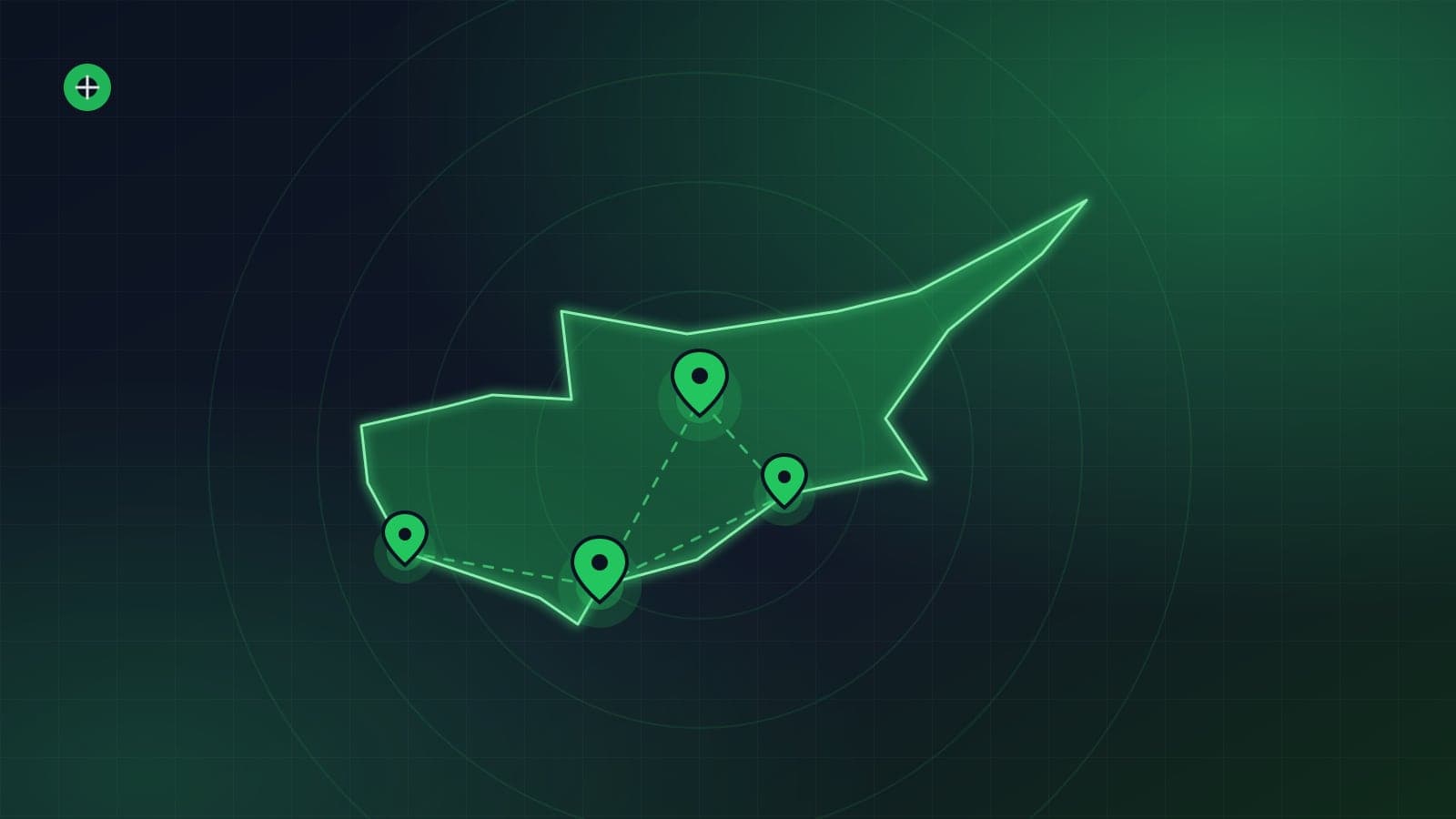
Cyprus has four cities that matter for most advertisers, and each behaves differently.
- Limassol is the business and expat hub: finance, shipping, tech, a large Russian-speaking community, and the most competitive dining scene on the island. Costs per click are highest here for professional services and property.
- Nicosia is the capital and the government and corporate centre, with two large universities. Demand is steady all year rather than seasonal, and lunch-hour and business-district targeting works well.
- Paphos is tourism, retirees and property. Highly seasonal, with a large English-speaking audience and strong demand for villas, healthcare and hospitality. It is also where we are based.
- Larnaca has the airport, a growing marina and port area, and a lot of new development. Arrivals search here first, which makes "first day on the island" campaigns unusually effective.
Radius targeting, dayparting and city-specific landing pages are cheap ways to respect those differences. Our location pages go into each city.
Seasonality changes the plan
From April to October the coast fills with visitors and demand for hospitality, rentals, activities and retail climbs. Winter is quieter on the coast but steady in Nicosia and for services that residents use all year. Orthodox Easter, the August holiday period and the Christmas season each move demand in their own way, and for restaurants the Christmas booking window is one of the most valuable of the year: our 3.32 times return on ad spend case study came from exactly that period.
Plan budgets month by month rather than as a flat annual figure. Scale coastal campaigns from March, protect your brand searches in peak season when OTAs and competitors bid on your name, and shift budget to retargeting and loyalty in the quiet months.
What it costs
Cyprus clicks are cheaper than the UK or Germany for the same keyword, but competitive categories such as legal, property, healthcare and finance have caught up in recent years. In practice:
- Local services and hospitality can see useful results from a few hundred euros a month per channel.
- Professional services and property businesses usually start between €1,500 and €3,000 a month in media.
- Management fees sit on top of media and should be flat, not a percentage of spend.
We wrote a fuller breakdown in how much Google Ads costs in Cyprus, and the pricing page explains how we quote.
Measurement is where most Cyprus campaigns fail
The most common problem we find is not the wrong channel or the wrong budget. It is that nobody can say what a campaign produced. Conversion tracking counts page views instead of enquiries, phone calls go unrecorded, and the Meta pixel fires on the wrong page. The platforms then optimise toward whatever they were told was a conversion, which is how you end up with cheap clicks and no customers.
Before spending, set up Google Analytics 4 and Tag Manager properly, define conversions that match real business outcomes (a call, a booking, a qualified enquiry, a sale), add the Meta Conversions API, and configure consent mode for EU rules. It is unglamorous work and it is the difference between a campaign you can improve and one you can only hope about. See conversion tracking and CRO.
A sensible order of operations
If you are starting from nothing, this is the sequence we recommend for most Cyprus businesses:
- Fix the website basics. Fast on mobile, one clear action per page, contact details visible, Greek and English if you serve both.
- Set up tracking before any spend goes live.
- Claim and complete your Google Business Profile. It is free and it drives a large share of local and tourist discovery.
- Launch Google Search and Maps for the searches with clear intent. This produces leads fastest.
- Add Meta for retargeting first, then prospecting with tested creative.
- Review weekly, not monthly. Cut what does not work, feed what does, write down what changed.
- Test a new channel each quarter (TikTok, LinkedIn, a new language layer) with a small budget and a clear pass mark.
Most businesses that follow that order have working, measurable advertising within two months. The ones that skip steps two and six are usually back at step one within a year, spending more and knowing less.
Tell us what you sell and who you want to reach. We reply with a recommended channel mix, a starting budget and, if you already advertise, an audit of what is wasted.